
The process explained:
Vapour Blasting is a process also known as wet blasting, or aquablast cleaning. The Vapour Blast process involves 3 basic components, a slurry consisting of glass beads and water with compressed air providing the motive force. No hazardous or toxic chemicals are used. The process takes place inside of a purpose built blasting cabinet which utilizes a recirculation pump to maintain the slurry in suspension.
Located inside the blast cabinet is a hand held spray nozzle which receives a continuous supply of the slurry. This nozzle is the mixing point where the slurry and compressed air come together, exiting in a high velocity vapour. It is this vapour that performs the cleaning action, resulting in a “like new” surface finish.
The process cleans metal surfaces without damaging, eroding or abrading the underlying base metal, making it safe for maintaining bearing fits or critical dimensions. Machined engine surfaces such as cylinder bores, milled head surfaces, or valve seats will not be affected by Vapourblasting.
Why It Works So Well
The combination of the water and glass bead slurry provides a hydraulic cushioning effect to lessen the glass beads impact on the metal’s surface. Working together, they provide a peening/honing action that cleans the metal surface, resulting in a finish that minimizes further staining and oxidation.
Located inside the blast cabinet is a hand held spray nozzle which receives a continuous supply of the slurry. This nozzle is the mixing point where the slurry and compressed air come together, exiting in a high velocity vapour. It is this vapour that performs the cleaning action, resulting in a “like new” surface finish.
The process cleans metal surfaces without damaging, eroding or abrading the underlying base metal, making it safe for maintaining bearing fits or critical dimensions. Machined engine surfaces such as cylinder bores, milled head surfaces, or valve seats will not be affected by Vapourblasting.
Why It Works So Well
The combination of the water and glass bead slurry provides a hydraulic cushioning effect to lessen the glass beads impact on the metal’s surface. Working together, they provide a peening/honing action that cleans the metal surface, resulting in a finish that minimizes further staining and oxidation.
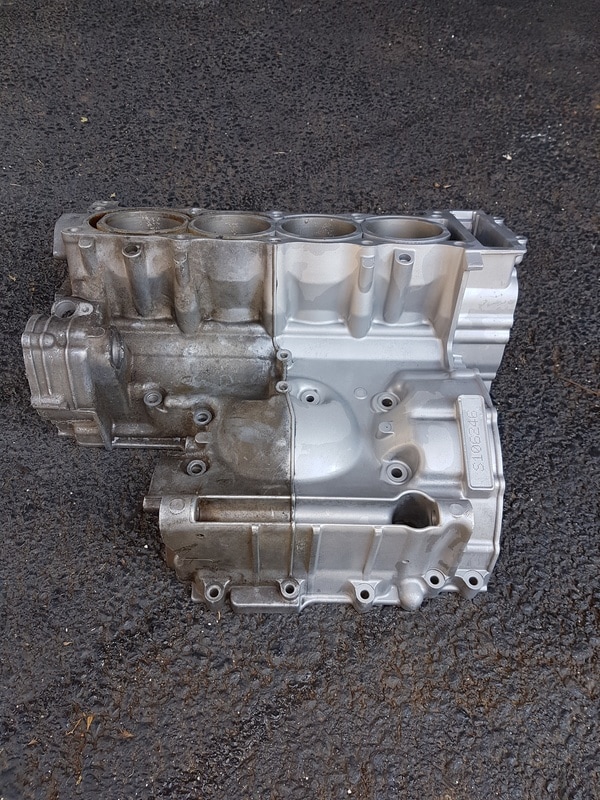
17 YEAR OLD CRANKCASE HALF SHOWING WHAT IS POSSIBLE.
|
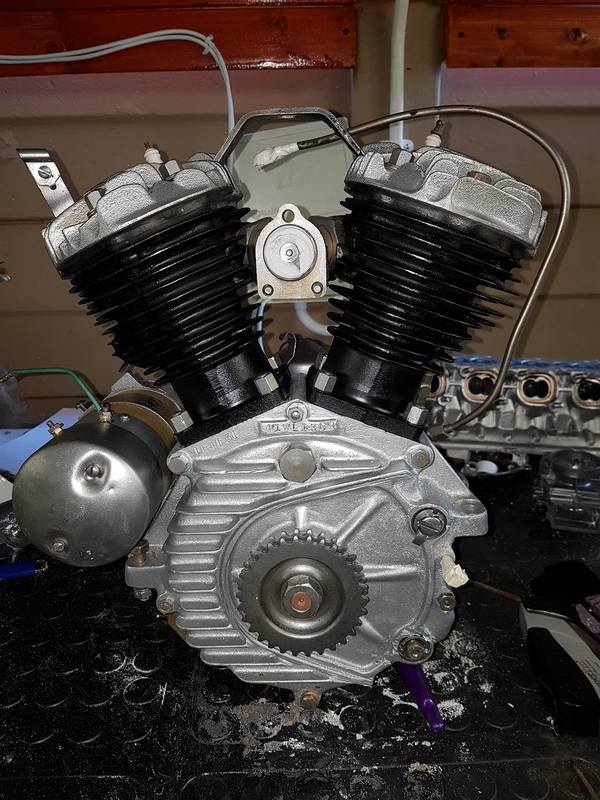
1944 HARLEY DAVIDSON ENGINE.
|
|
|